Engines

ZenWave is structured as a multi-horizon system portfolio, not a single strategy. Each engine operates independently with fixed risk constraints and distinct signal logic. The engines are designed to diversify timing and exposure across different structural regimes.

A

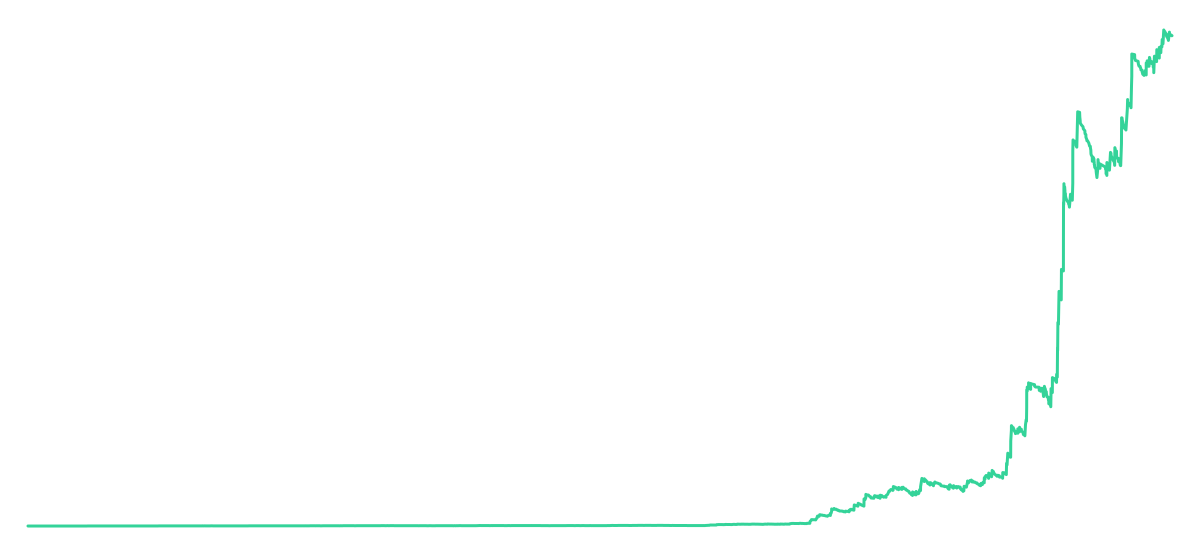
ZenWave A — Long-Term Structural Engine

LiveFully AutomatedWFA-Validated2014–2025

ZenWave A is a 12-year structural USDJPY breakout engine built using rigorous, institutional-style Walk-Forward Analysis. It forms the foundation of the ZenWave portfolio.

Risk per trade

1.00%

WFA Slices

A1–A4

Profit Factor

2.01

Max Balance DD

37.25%

Walk-Forward Findings (A1–A4)

  • Stable out-of-sample performance across all slices
  • Consistent profit factor & resilience across volatility regimes
  • Parameter stability across a 12-year window
  • AI-assisted audit confirms exceptional robustness

B

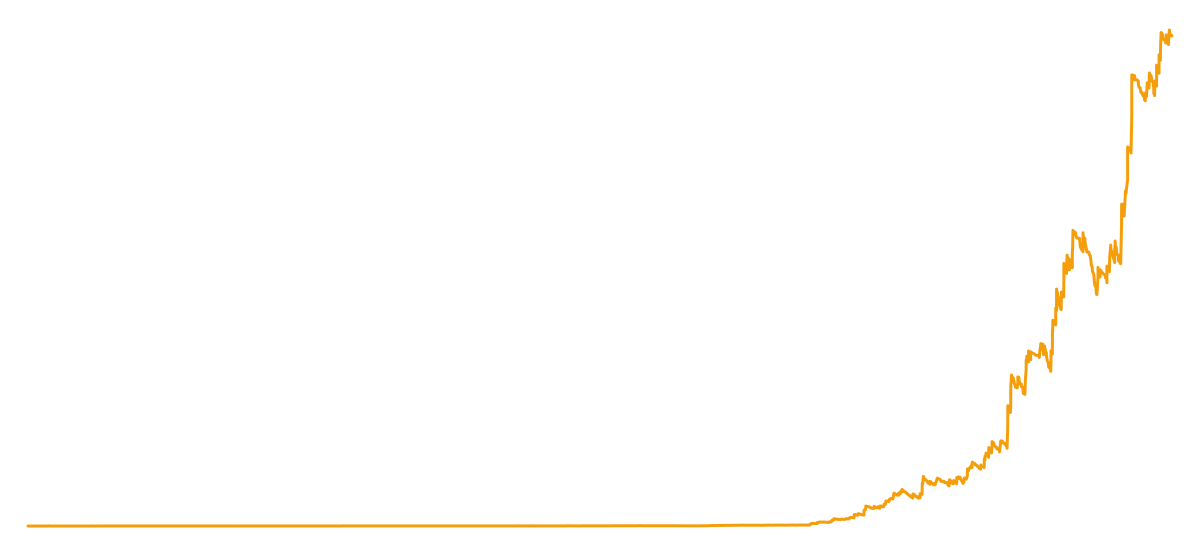
ZenWave B — Medium-Term Adaptive Engine

LiveFully AutomatedWFA-Validated2018–2025

ZenWave B targets medium-horizon structural drift, validated across five independent WFA slices. B5 is selected for production due to exceptional IS/OOS alignment and low fragility.

Risk per trade

1.00%

WFA Slices

B1–B5

Selected Slice

B5

Period

Jul 2018 – Nov 2025

Walk-Forward Findings (B1–B5)

  • All slices produce profitable OOS performance
  • Controlled parameter drift — no chaotic jumps
  • Strong regime alignment during 2022–2025 volatility
  • Dual-AI audit confirms procedural integrity

C

ZenWave C — Short-Term Volatility Engine

Research 2026Public Build

ZenWave C will be built as a short-horizon volatility engine targeting Tokyo/London transition volatility bursts. It completes the A/B/C multi-horizon framework.

2026 Build Plan

  • Complete new quant framework
  • Full Walk-Forward Analysis (C1)
  • Multi-regime stress testing & parameter stability evaluation
  • Public documentation of every step on YouTube

ZenWave Book

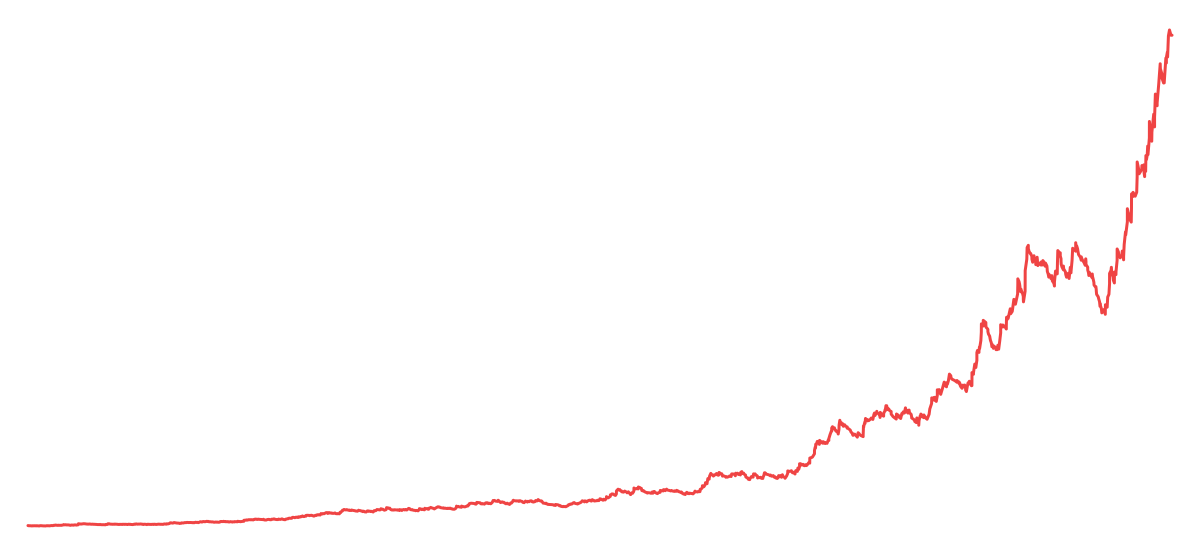
ZenWave Book is the combined portfolio running all engines under a shared 0.50% total risk cap per trade cycle. The cap is split equally across active engines — currently 0.25% each with A and B, dropping to ~0.166% each once C is added.

Total risk cap

0.50%

Current (A + B)

0.25% each

With C (A + B + C)

~0.166% each

Execution

Fully automated

Multi-horizon robustness with reduced decay risk and broader regime coverage. Parameters frozen. No discretionary intervention.